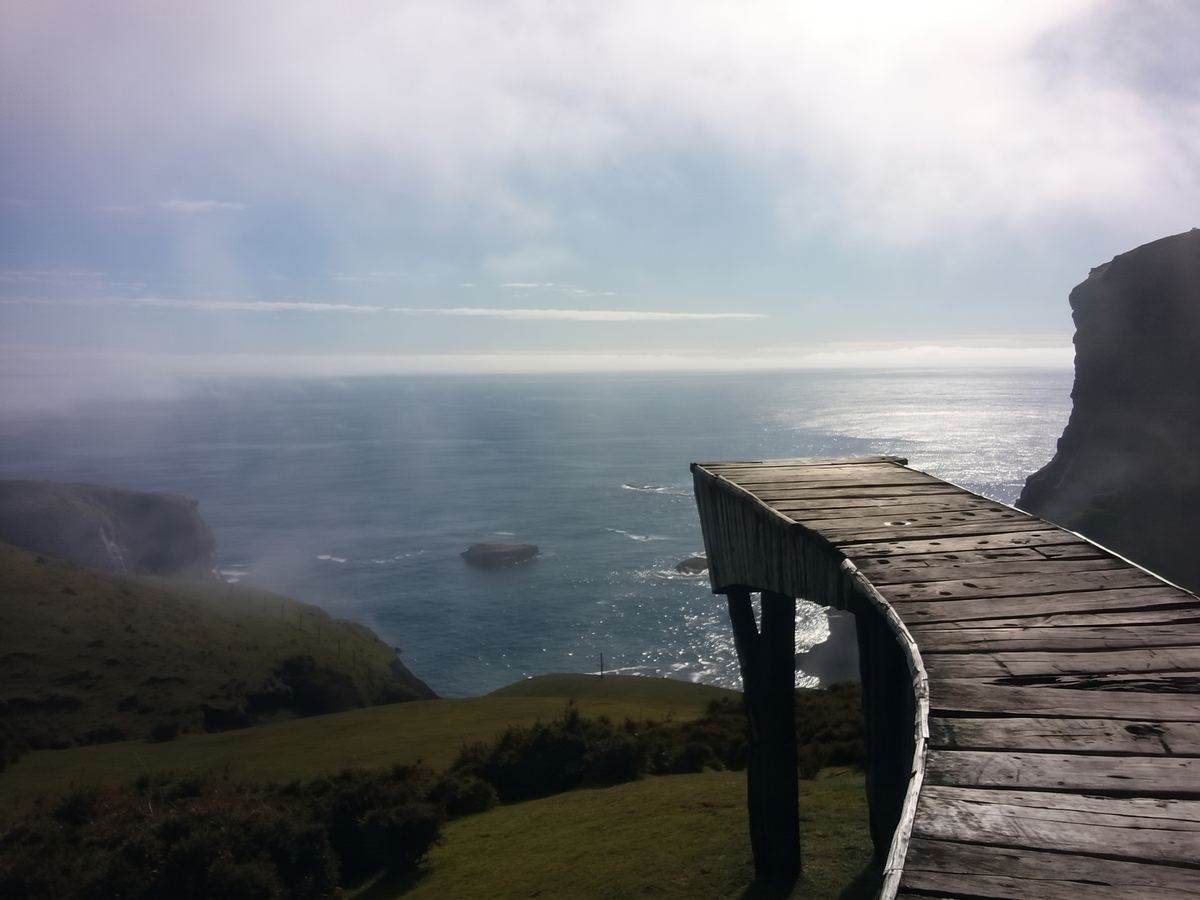
The Untamed Ocean
The Chiloé archipelago possesses two distinct geographical souls that dictate the character of those who explore it. To the east, inner seas and channels offer sheltered coastlines, deep inlets, and gentle rolling hills that invite tranquility. Yet crossing the Coastal Range toward the west, the ecosystem shifts dramatically. There lies a rugged, impenetrable, and inhospitable coastline continuously battered by wind and the raw force of the Pacific Ocean.
It is precisely within this wild setting—defined by abrupt rock formations and an endless horizon—that Puñihuil Bay emerges. Far more than a mere geographical feature, this sanctuary stands as a last natural stronghold; a fortress of stone and sea where wildlife thrives in its purest, most resilient form.

The Biological Miracle
Off the beach of this cove rise three rock formations harboring a phenomenon unique on the planet. The Puñihuil Islets hold the distinction of being the only known place in the world where both Humboldt and Magellanic penguins nest side by side. Both species, similar in size and coloration and classified as vulnerable, return faithfully every summer to this sanctuary to breed and raise their chicks in a protected habitat.
Yet the miracle doesn't end with these philopatric birds. The islets are also home to Chiloé's most significant population of marine otters (chungungos, Lontra felina). One of the smallest otters in the world, equipped with dense dark fur that insulates it against freezing waters, it glides with fascinating agility through heavy surf. The ecosystem is further enriched by cormorants, kelp geese, and sea lions, while open waters off the bay become a prime migration corridor for blue whales during summer months.
Ethical Tourism & Conservation
The delicate nature of this sanctuary demands unwavering commitment. Recognizing its immense biological value, CONAF designated the area a Natural Monument in 1999. However, the true cornerstone of its protection is the local community itself. In 2006, local boat operators formed the Puñihuil Ecotourism Association with a clear mission: to plan responsible marine development that guarantees biodiversity preservation.
The Conscious Traveler's Code
Under this ethical framework, landing on the islets is strictly prohibited. Wildlife viewing occurs solely via regulated boat tours from the water, keeping a respectful distance and maintaining quiet reverence. By choosing this approach, you become an active guardian of conservation.
Returning to the Station
After witnessing the raw beauty of the Pacific coast, the journey back across the island invites quiet reflection. Descending once more toward the tranquil waters of the eastern fjords and entering Castro, the hospitality of Estación Hostel welcomes you on the waterfront at Pedro Montt 250. It is the precise moment when ocean spray, freezing gusts, and Pacific surf give way to warmth.
Stepping through our doors, you enter a space designed for deep rest and inspiration. The contemporary design of our common lounges, styled in Fjord Blue and Live Rust tones, creates a cozy atmosphere honoring island heritage. It is the perfect refuge to shed expedition gear, connect to high-speed fiber-optic Wi-Fi, and sit by wide windows overlooking Train Plaza and the bay—all with a cup of specialty coffee as you replay the memories of an extraordinary day.
Continue Exploring the Logbook

Make Conservation Your Travel Banner
The archipelago demands mindful exploration. Join those who choose tourism that preserves natural heritage.
Book Your Station